The Orion constellation is easy to recognize, marked by three bright stars forming its belt and a “sword” hanging below. What’s less obvious is that this small patch of sky is packed with a variety of nebulae. That sword is home to the Orion Nebula (M42), a stellar nursery that prominently shows glowing emission gas, reflected starlight, and lanes of dark dust all in one region.
Orion Nebula
The Orion Nebula (M42) is one of the few deep-sky objects visible to the naked eye. Even under light-polluted skies, it can still be seen below Orion’s belt as a faint, slightly fuzzy patch rather than a sharp point of light. At roughly 1,300 light-years away, it’s relatively close on a galactic scale, and its intense star formation makes it unusually bright.
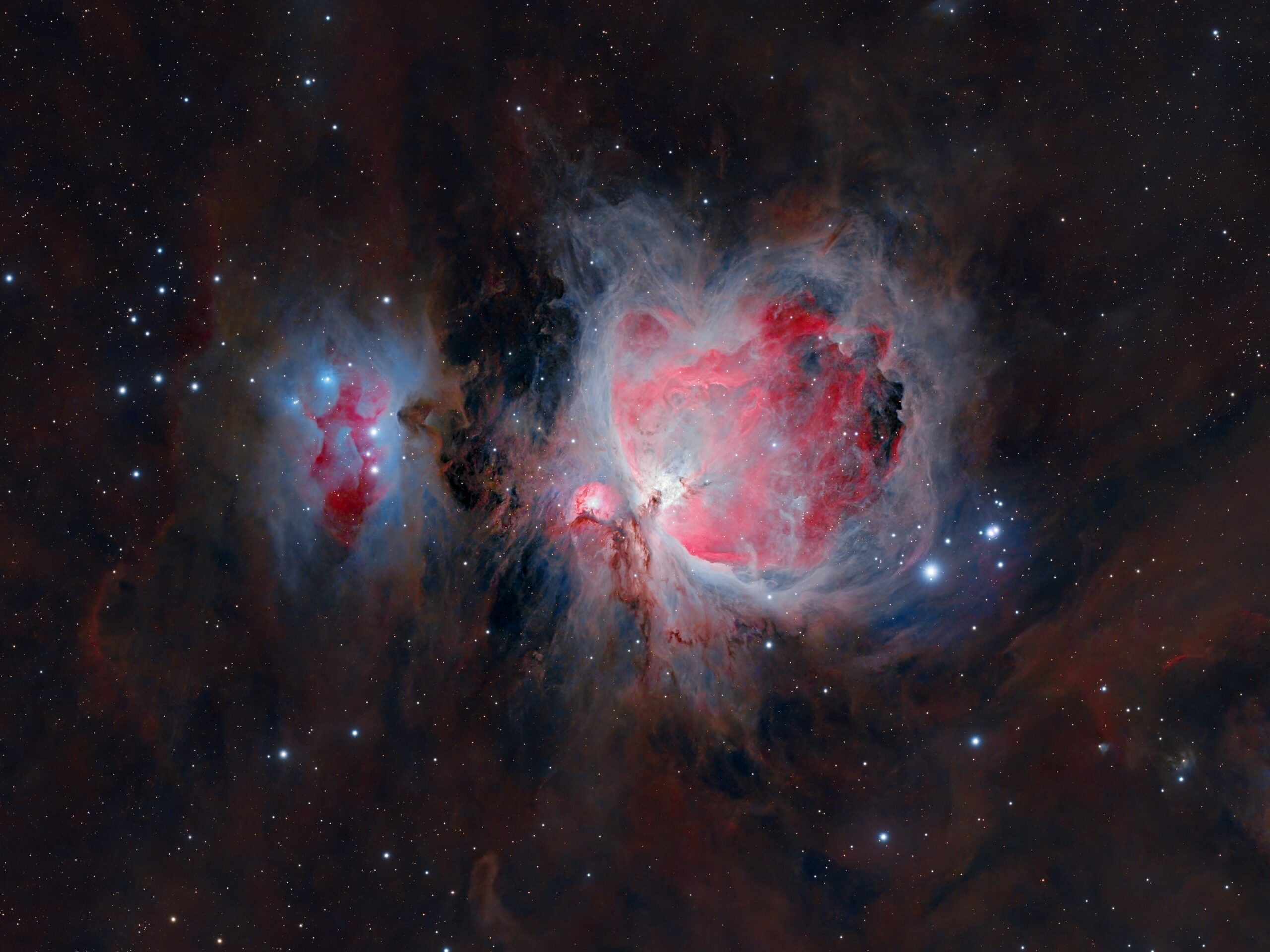
M42 is primarily an emission nebula, where hot, young stars energize surrounding hydrogen gas, causing it to glow. Imaging this object typically requires a blend of exposure times, with short exposures capturing detail in the dense, active core and longer exposures revealing the fainter structure of the surrounding nebula.
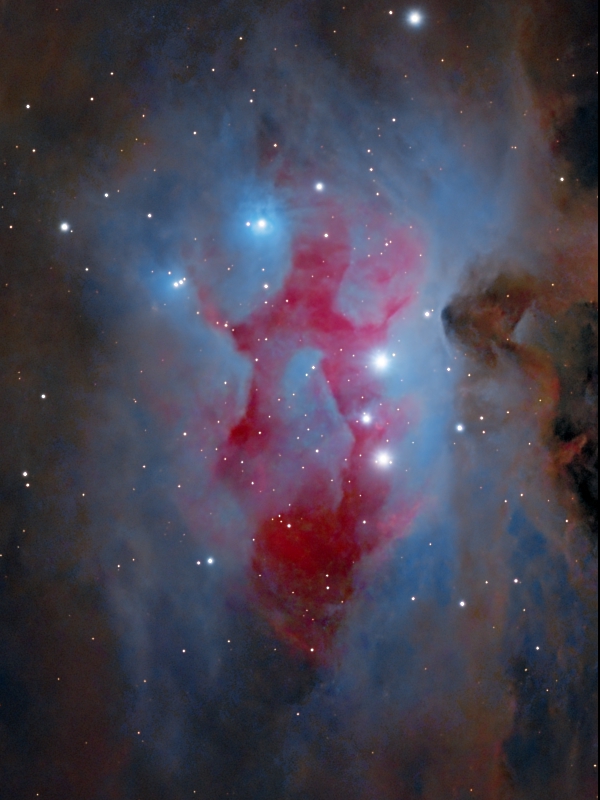
Right next to the Orion Nebula sits the Running Man Nebula (NGC 1977). The Running Man is a good example of how Orion offers variety of nebulae: compared with the Orion Nebula’s strong glow, the Running Man is largely a reflection nebula, where dust is lit by nearby stars and scatters their light back toward us. When both targets land in the same image, you can point out two different mechanisms side-by-side: glowing gas in one area, and externally lit dust in another.
Horsehead Nebula
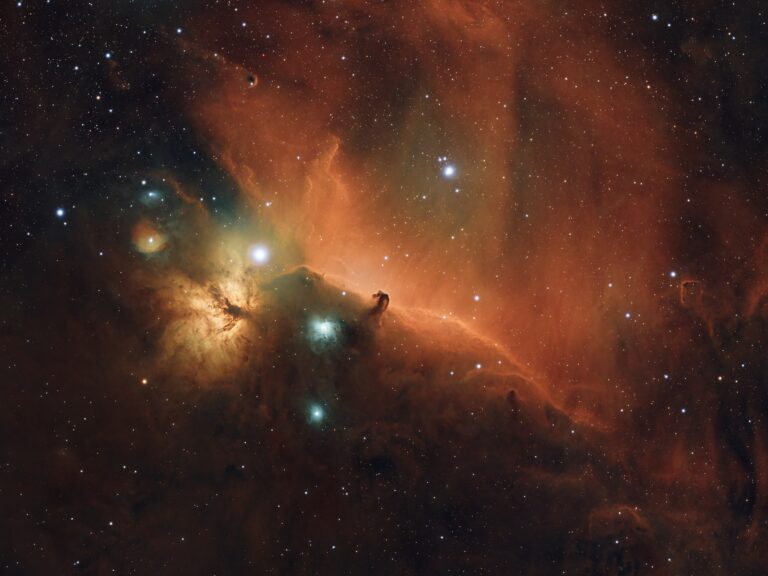
The Horsehead Nebula highlights a third mechanism: the power of dust to block light. The Horsehead looks dark not because it’s empty, but because a dense, cold cloud sits in front of a brighter background. In this case, the backdrop is IC 434, and the Horsehead stands out as a silhouette. That silhouette effect is why it remains one of the most recognizable shapes in deep-sky astrophotography.
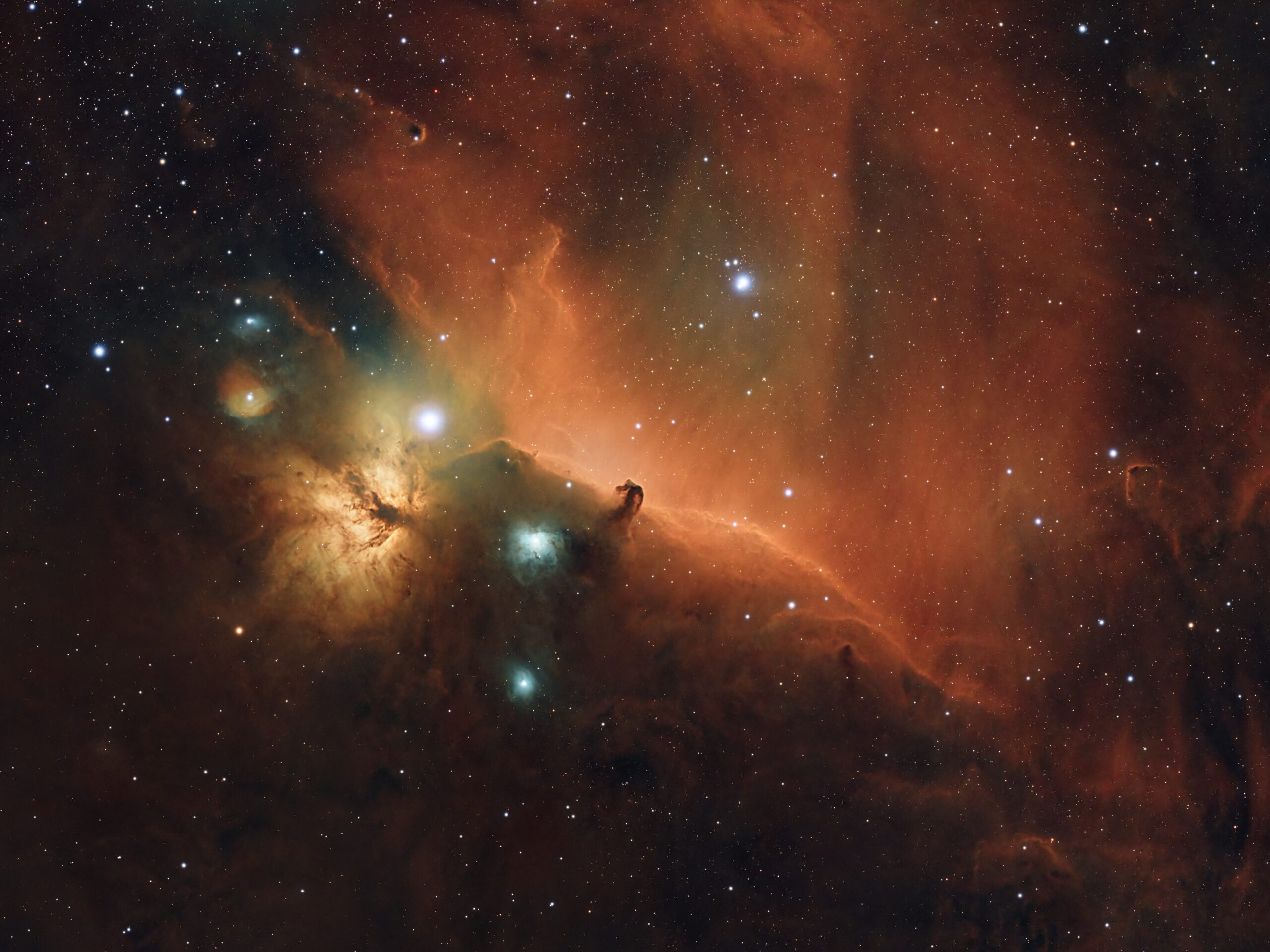
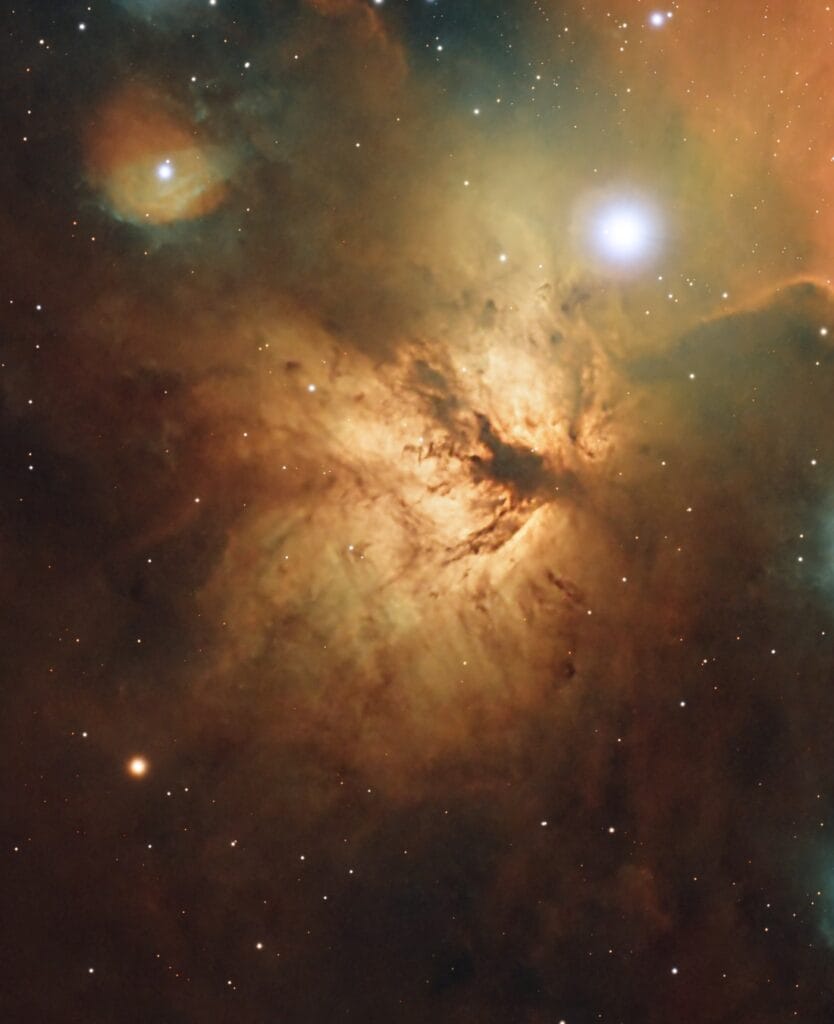
When you frame the Horsehead region wide enough, as in the image above, the Flame Nebula (NGC 2024) often comes along for the ride. The Flame is an emission nebula and active star-forming region, so it brings that “glowing gas” look back into the same field as the Horsehead’s dark dust. It’s a great contrast in one shot, with bright structure right next to the dark silhouette of the Horsehead.
All of these targets sit in or near the Orion Molecular Cloud Complex, a nearby region of star-forming gas and dust that runs through Orion’s Sword and Belt. To capture that full structure, I’d need a much wider field of view than my current setup allows, but it’s definitely something I plan to image in the future.
Witch Head Nebula
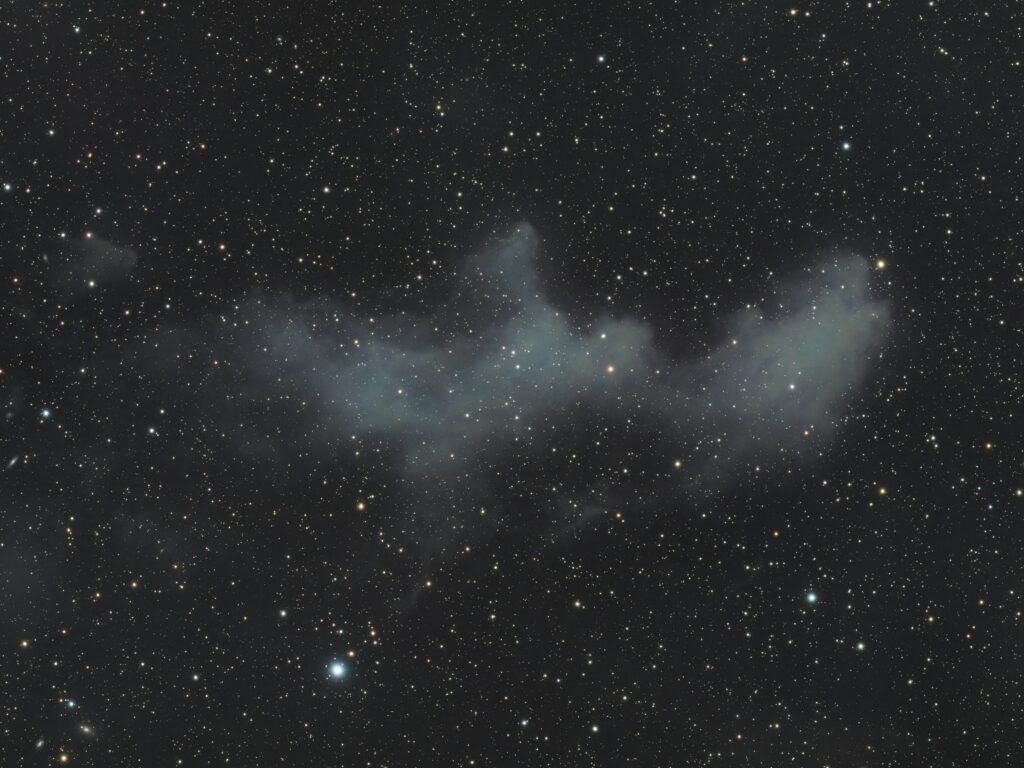
The Witch Head Nebula (IC 2118) is a separate Orion-area target, and it stands out for a different reason. It’s a reflection nebula illuminated mainly by the bright star Rigel, and it’s very faint. Instead of glowing on its own, the dust is reflecting starlight, which is why it appears blueish grey. That blue color comes from the way dust scatters shorter wavelengths of light more efficiently.
My Favorite Constellation
Taken together, these targets are a good snapshot of how nebulae actually behave. The Orion Nebula shows energized gas and active star formation. The Running Man adds reflected starlight. The Horsehead shows how dust can block and shape what’s behind it. The Flame brings back emission, but with strong dust structure layered through it. And the Witch Head, sitting off near Rigel, rounds things out as a faint reflection target that takes more time and care to capture.
Orion keeps pulling me back for two simple reasons. It’s not just one target, and each structure is a lot of fun to capture. It’s a compact region where glowing gas, cold dust, and young stars all show up together, each revealing a different part of how these regions form and evolve. Every year I come back to improve my images, and there’s still more to capture, including the full molecular cloud complex.
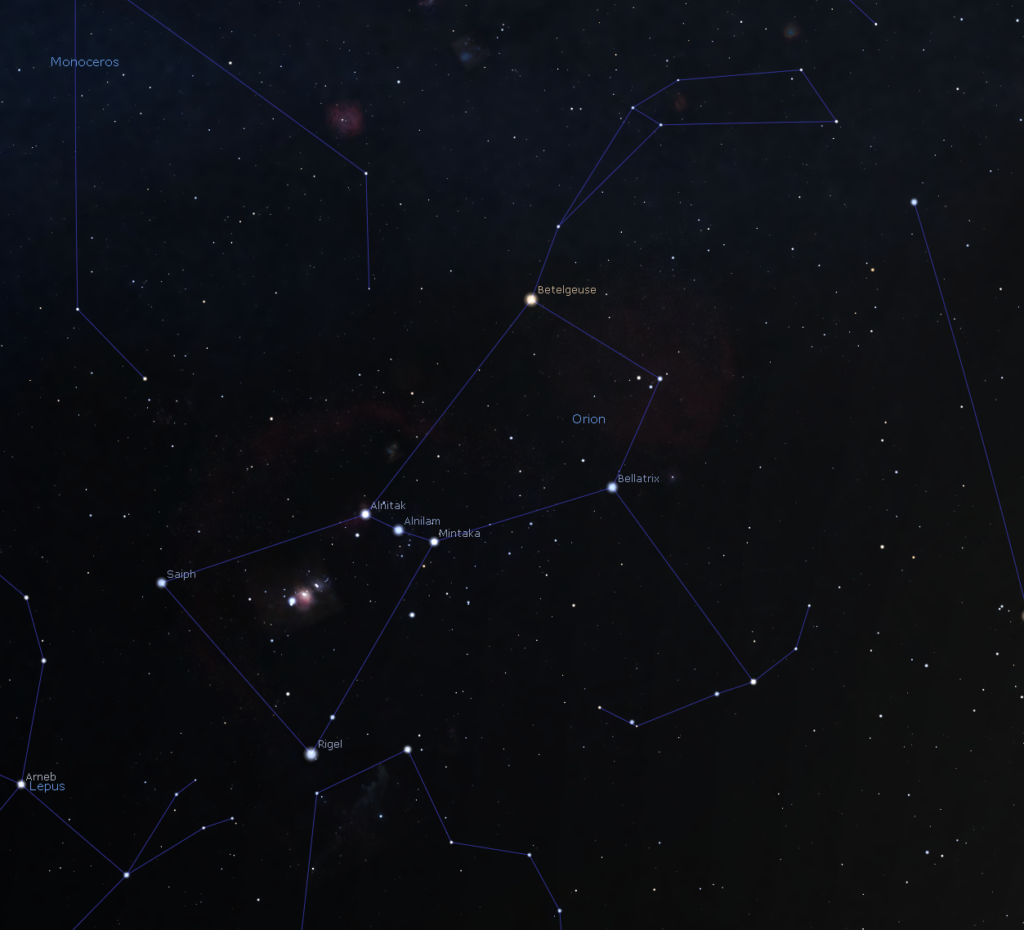
If you want to see exactly where these images fall within Orion, head over to the sky chart.